
Guest bathrooms and shared pipework
Record which rooms are affected and when water appears. Arrange access above or beside the stain, including any shared riser.
Bathroom and riser investigationsA damp guest room, falling boiler pressure or an unexplained water bill can put rooms out of use. ADI investigates hidden leaks in hotels, guest houses and spas across Greater London, with access planned around your guests and maintenance team.
ADI investigation · January 2024
Water dripped through a hotel corridor ceiling during heavy rain. The booking notes described a small flat roof above the damage, with services crossing it, a sloping tiled roof higher up and access through a hotel bedroom window.
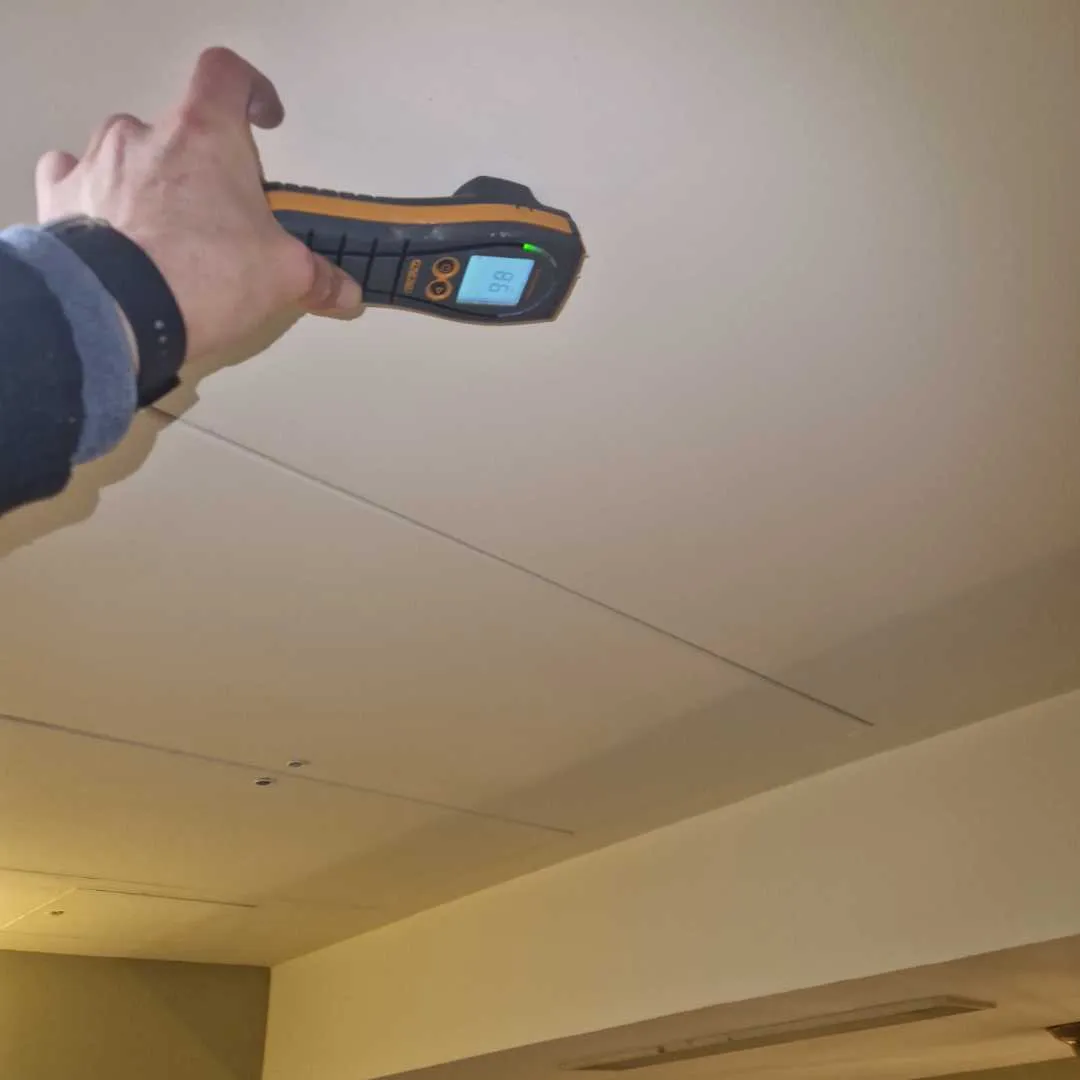
On site, ADI recorded elevated moisture and a cold thermal pattern in a small area of the ceiling. The engineer inspected the roof and found sections of the waterproof membrane coming away. Water was run over the roof for ten minutes during a flood test, and dripping was observed inside.
Tracer gas introduced into the ceiling cavity was detected above at the roof junction by the skylight, the ladder fixing and a support for a vent pipe. The report recommended renewing the membrane, paying particular attention to those areas.
The roof repair was left to a roofer.
Hotel leak detection services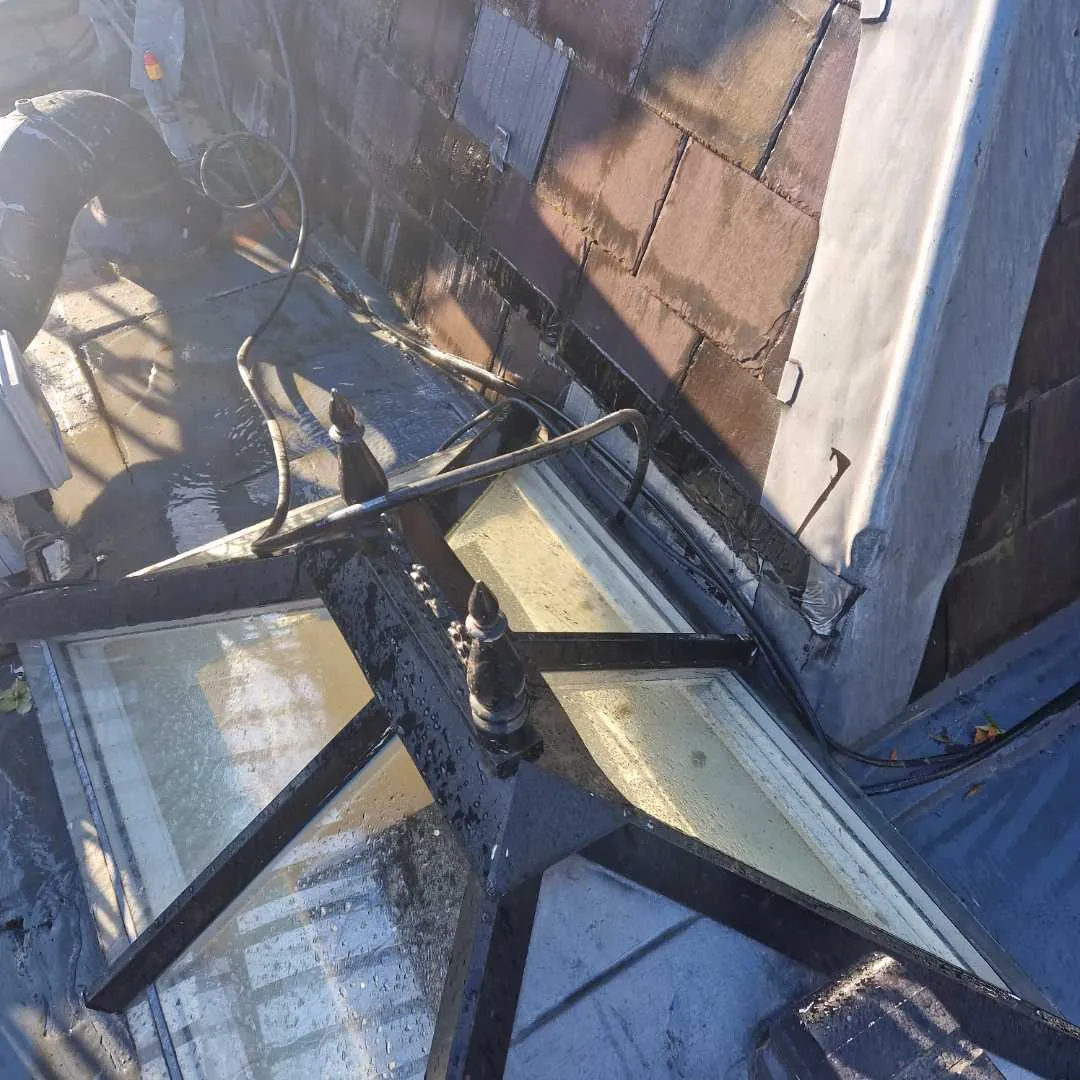
Record which rooms are affected and when water appears. Arrange access above or beside the stain, including any shared riser.
Bathroom and riser investigationsProvide pressure records and plant details. Agree which circuits can be tested without interrupting essential guest services.
Heating leak surveysShare meter readings, known consumption and available pipe plans. Identify shared supplies and safe access to external routes.
Underground and boosted suppliesDescribe the water loss and operating schedule. Agree access and any isolation with the staff responsible for the facility.
Pool and spa leak detectionRecord the relationship to rainfall and affected rooms. ADI investigates ingress; roofing and building repairs need the appropriate trade.
Roof and façade investigationsNote whether damp follows equipment use. Arrange access around catering and laundry operations, with existing drainage records where available.
Drainage and back-of-house leaksFor a London hotel, give one site contact responsibility for the survey arrangements. Confirm the quotation and any limits on access before booking.
Provide room numbers, photographs and the timing of water loss. Share meter or pressure records and earlier maintenance findings.
Plan entry around guests, occupied rooms and staff-only areas. Identify who can approve interruptions to water, heating or leisure facilities, and share induction requirements.
The report records tests, observations and unresolved access limits. Agree further investigation and repair costs separately; an insurer decides whether the work is covered.
Temperature and moisture readings help guide the search. Pressure tests, acoustics, tracer gas or cameras may then be appropriate for the suspected source. Pipework, isolation and access determine the method.
Readings across a ceiling show how far water has travelled. Here they picked out a small affected area of the corridor ceiling and narrowed where to look.
Records surface temperature differences. A cold pattern appeared over the same small area, which pointed at the roof above rather than settling the cause on its own.
Water is run over a suspect roof under controlled conditions. Ten minutes of it produced dripping inside, which tied the damage to the roof above.
Introduced into the ceiling cavity and detected where it surfaces. It came up at the roof junction by the skylight, the ladder fixing and a vent-pipe support.
The access plan depends on how the building is used. A large city-centre hotel with conference guests needs a different approach from a boutique property in a conservation area or a spa hotel with extensive leisure facilities.
Tell us which rooms are affected and when they are available. Housekeeping observations can help establish whether the leak follows shower use, heating or rainfall.
In a smaller building, one closed room can matter. We use non-invasive tests first and explain where targeted access may be needed to confirm or repair the fault.
If the hotel is listed or has protected finishes, tell the office before booking. Share any restrictions on access or opening up so the investigation can be planned with your maintenance team. Agree further access separately if it is needed.
Pool water loss, filtration pipework and guest hot-water systems need to be considered separately. Tell the office which facilities are affected and any limits on access or isolation.
Hotel Leak Detection, a specialist service from ADI Leak Detection. Our hotel surveys draw on ADI’s engineers and specialist equipment across England, Scotland and Wales.
This page follows the ceremonial county of Greater London: the 32 London boroughs, including Westminster, but excluding the separate City of London. Call with the full postcode to discuss the property and current availability.
Access is planned with your team around occupied rooms and the areas that need testing. Tell the office about check-in, housekeeping and any facilities that must stay in use. Some tests require water or heating to be isolated for a period, and the timing is agreed with your maintenance contact.
Water can travel along pipework, floors and ceiling voids before it becomes visible. The engineer uses the pattern of moisture and the relevant pipe circuits to investigate the source. Access may be needed above, below or beside the room where the stain appears.
Yes. Meter readings, occupancy changes and details of equipment using water help establish what has changed. The survey can then check incoming mains, boosted supplies and internal circuits. If the hotel has annexes or outbuildings on the same meter, include them in the booking discussion.
Repairs are quoted separately from the survey. ADI can quote for pipework, drainage and pool repairs where appropriate. Roof and building-fabric leaks are located and reported for your roofer or building contractor to repair.
The report includes photographs, findings and recommendations. Commercial jobs also have a risk assessment and method statement. Ask your insurer what evidence they require before booking and pass that information to the office.
Have the postcode, the symptoms and any access restrictions to hand. ADI's office team will talk through the survey, quote and current availability for your property.